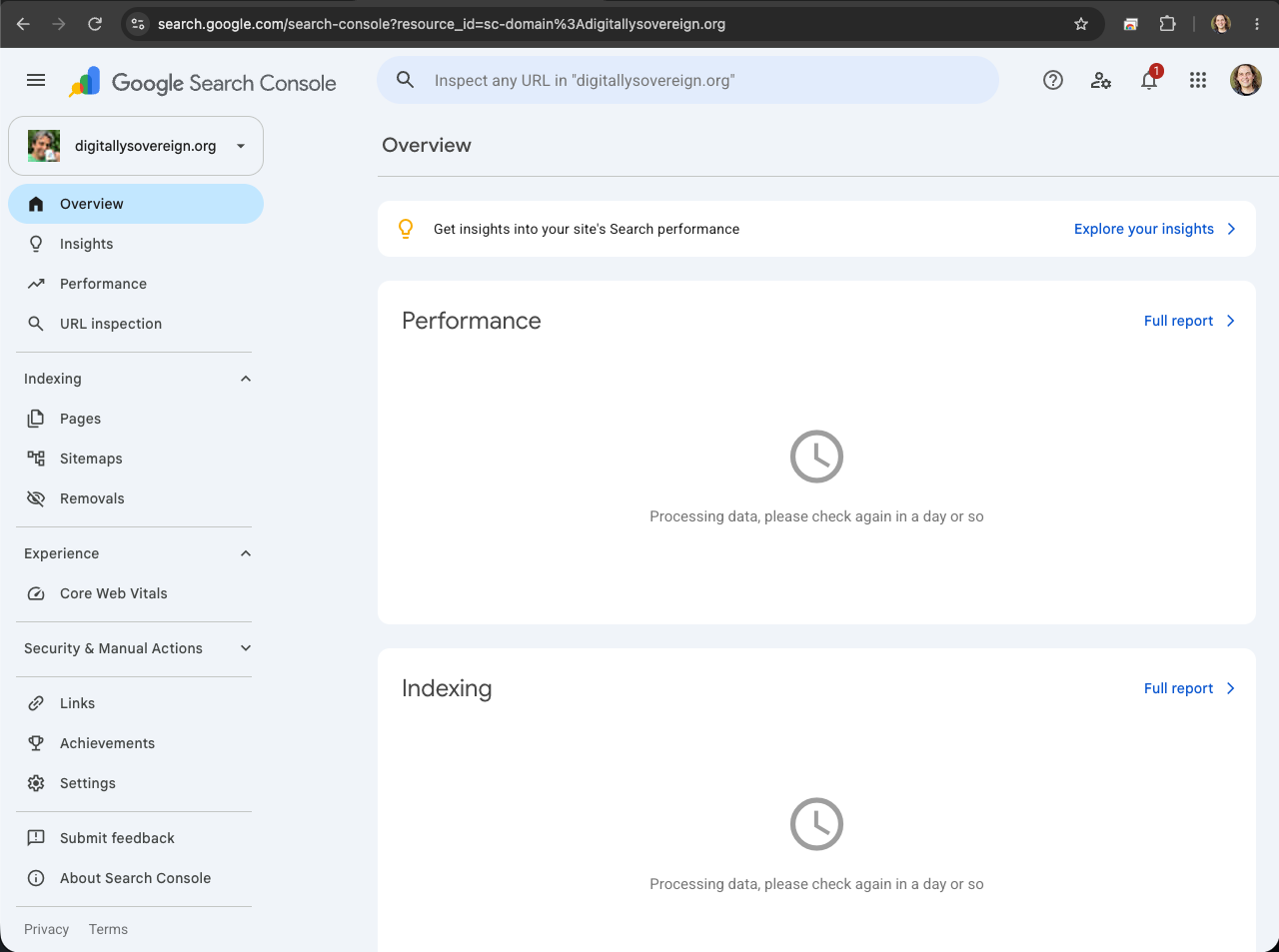
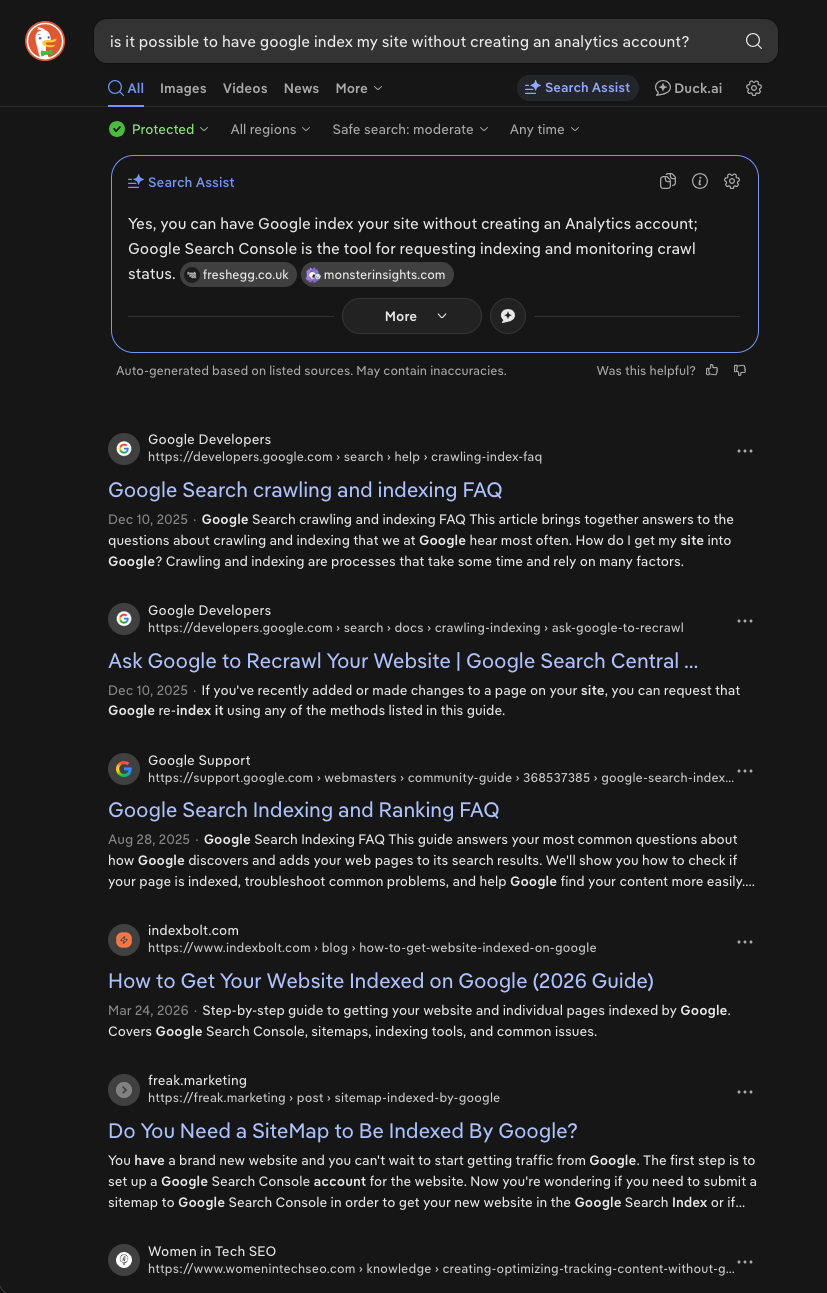
Yeah, I am curious about that. I was led to search.google.com when doing a duck duck go search. The impression I have from those search results is that I don’t have to connect to analytics. I’ll check back in here tomorrow!
I liked that last link in the results! It makes the case that you don’t even need most of the analytics provided by google analytics.
On Google:
But sit with this thought for a minute: nearly every action you take online is tracked. A large part of that data is collected or fed into Google. As of August 2023, 66.41% of global desktop internet users relied on Chrome. This number jumps to 66% when we look at global mobile browser usage. And according to BuiltWith, there are over 32.4 million websites using Google Analytics today.
We feed data into Google, and we rely on receiving data from Google to do our jobs.
If you feel uncomfortable or unsure about the level to which a single corporate entity tracks you, then I think it’s worth taking some time to examine ways that you can potentially reduce your reliance on Google’s most granular data sets.
I’m an SEO professional who eschews Google Chrome, uses Firefox or Safari, and keeps my cookie and ad tracking preferences locked down tight. You don’t have to go that far if you don’t want to — but you can begin re-evaluating the role of Google’s data in some of your SEO activities, starting with content optimization.
And on optimizing content without google analytics:
In my experience, marketers often think they need more analytics data than they actually do.
That included me, too, in the past! For a long time, I thought I needed to capture as much data on website visitors as possible — referral sources, click flows, heat maps, you name it. I’d then look at this data when planning or creating content. But one day, it hit me: I wasn’t actually using all of what I was collecting.
It’s entirely possible to bring people to your or your clients’ websites with no on-page analytics data for said site. I’m talking no tracked links, no Google Analytics data, no tag managers, no pixels — nada.